Fede Gonzalez

ControlPrivate Custody,
from concept to market
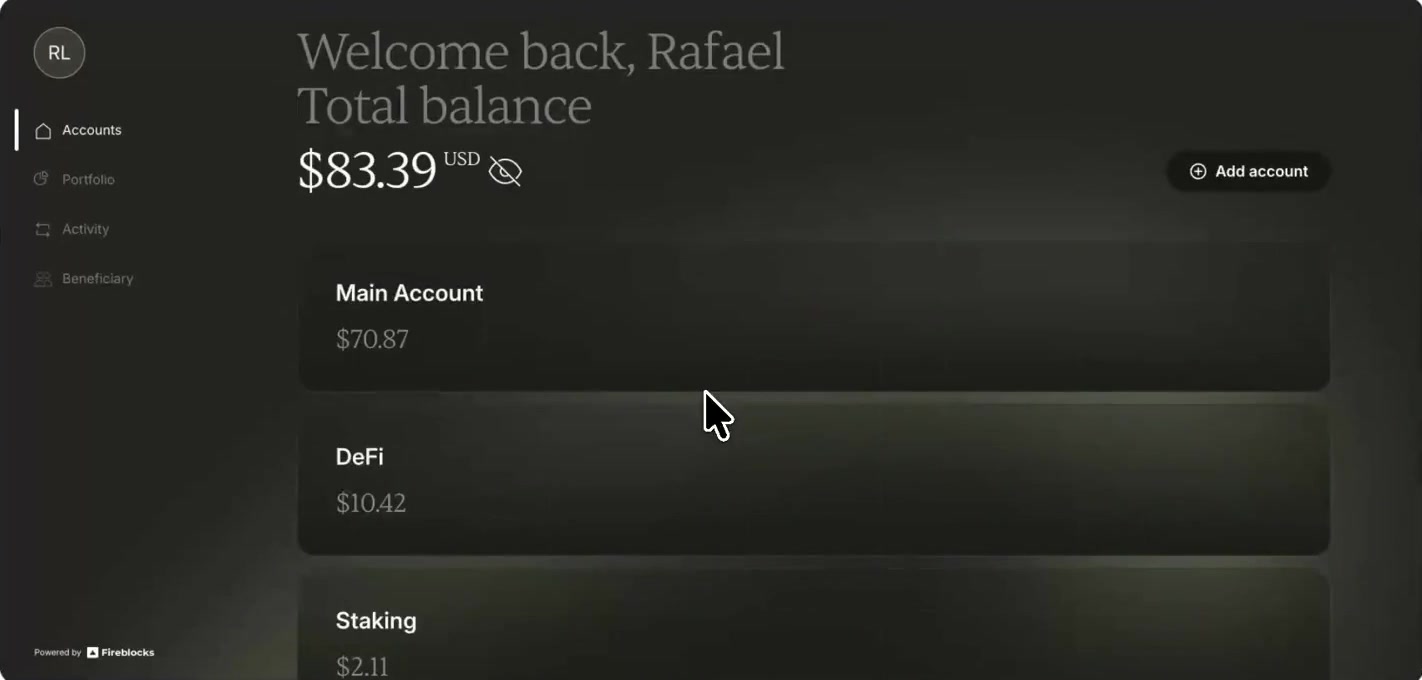
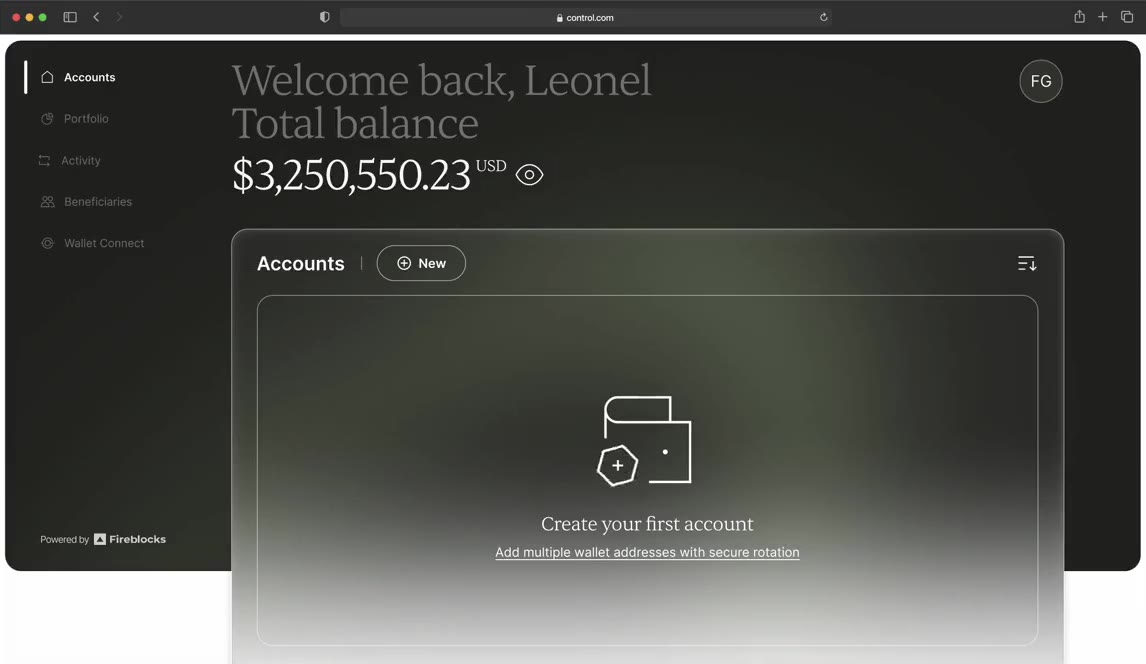
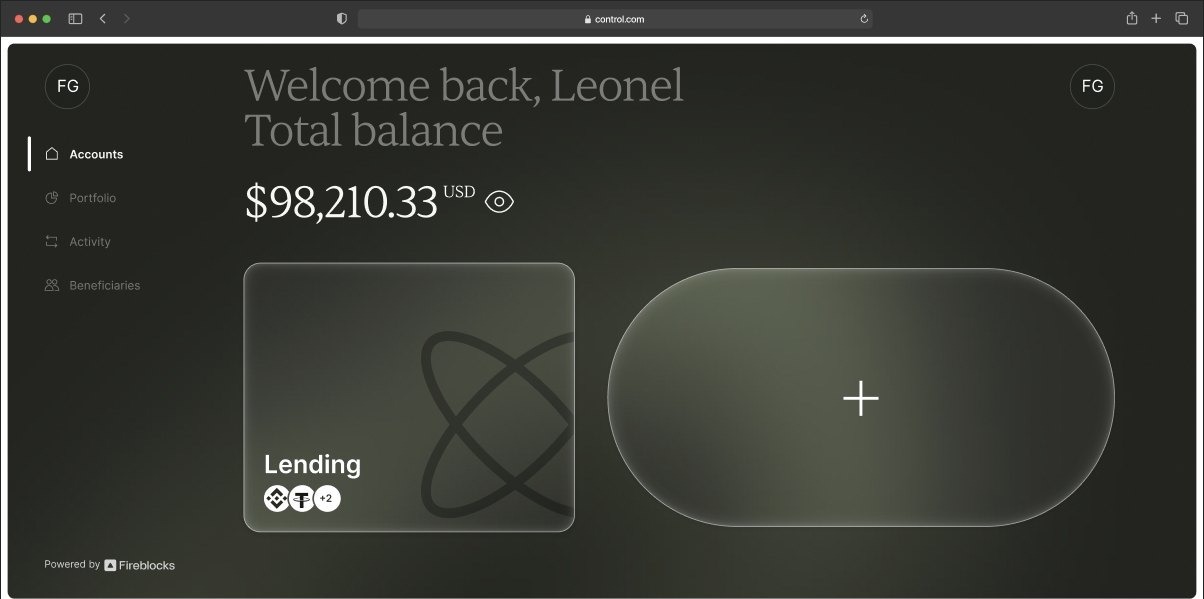
Production web console: Welcome back, total balance and the list of accounts

Overview

A Private Custody platform for family offices and high-net-worth individuals.

Clients own their digital assets directly, on Fireblocks' institutional infrastructure. The client holds one key share, Fireblocks holds the other, and Control can never move the funds. Every action starts on the web console and is confirmed on the iOS app. A Relationship Manager is part of the service.

My role. Building Control from concept to market with the Founder & CEO. Leading product strategy, roadmap and delivery with Engineering. Brand and Customer Experience run under the same direction as Product. I defined Private Custody, the category Control is built on.

An AI-assisted workflow built with Engineering makes shipping simpler: visual assets, the Design System and product docs are structured for AI tools. Also part of company priorities: fundraising, growth, organizational design, ways of working.

Role
CXO, founding team
2024–2026
Scope
Web console initiates
iOS app signs
Traction
$40M in assets
Status
LiveiOS 1.9.0
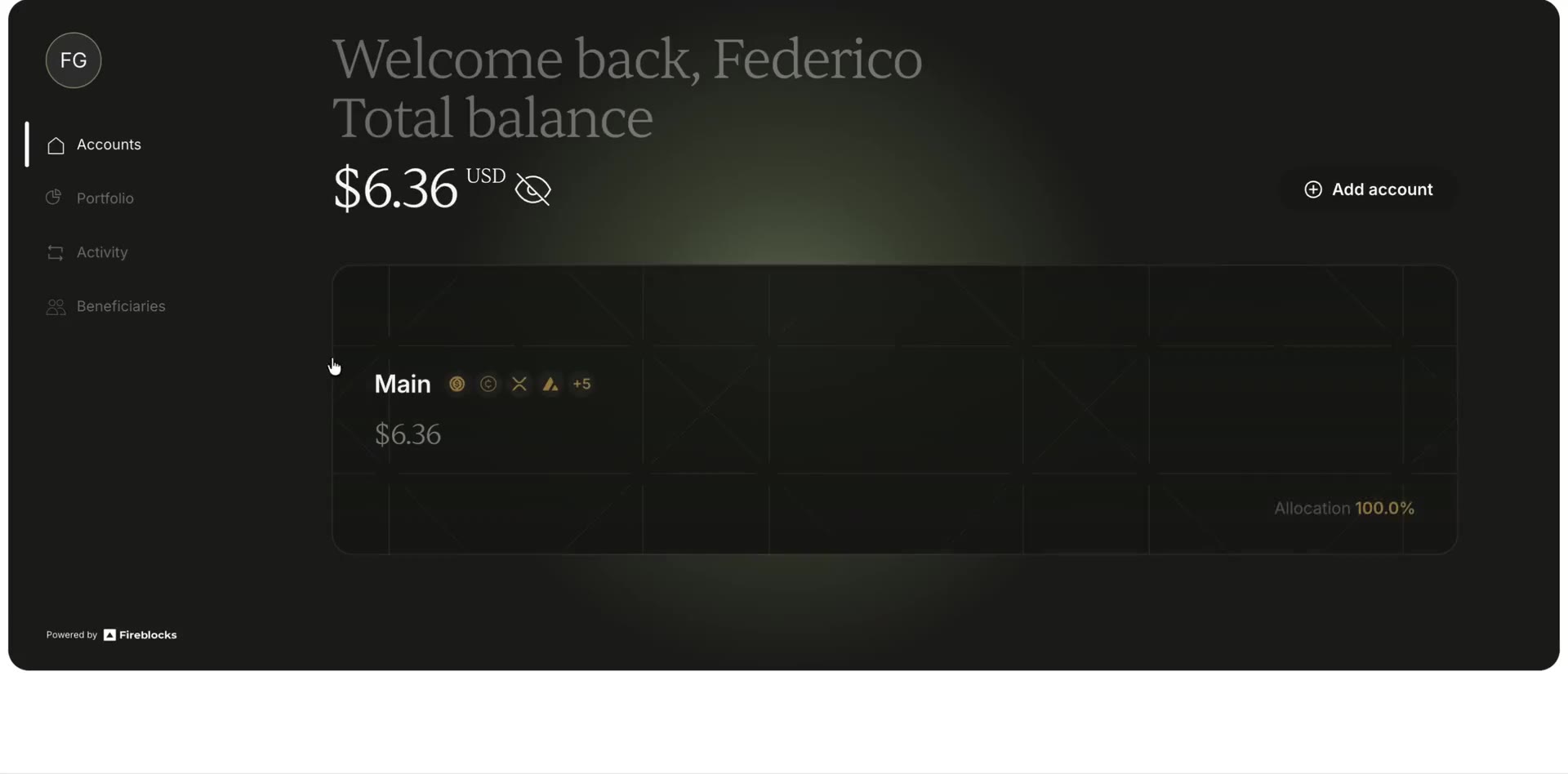
Production web console: Welcome back, total balance and the Main account

Roadmap

Short release cycles. Dependencies last.

A 23-week roadmap in three lanes: Product, Engineering, Security. A push to production every two to four weeks. Epics that depended on Fireblocks went last.
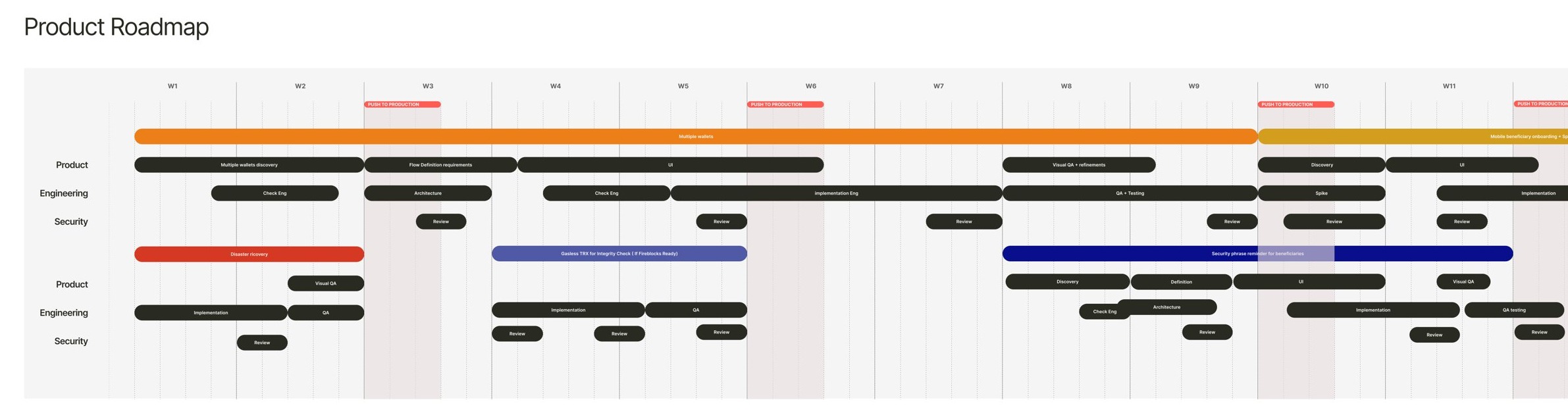
Product roadmap, weeks 1 to 11, with Product, Engineering and Security lanes

Web console

Actions start on the console. The phone confirms them.

Portfolio, accounts, activity, beneficiaries: everything is viewed in the web console, where every important action starts. The client confirms it on the iOS app.

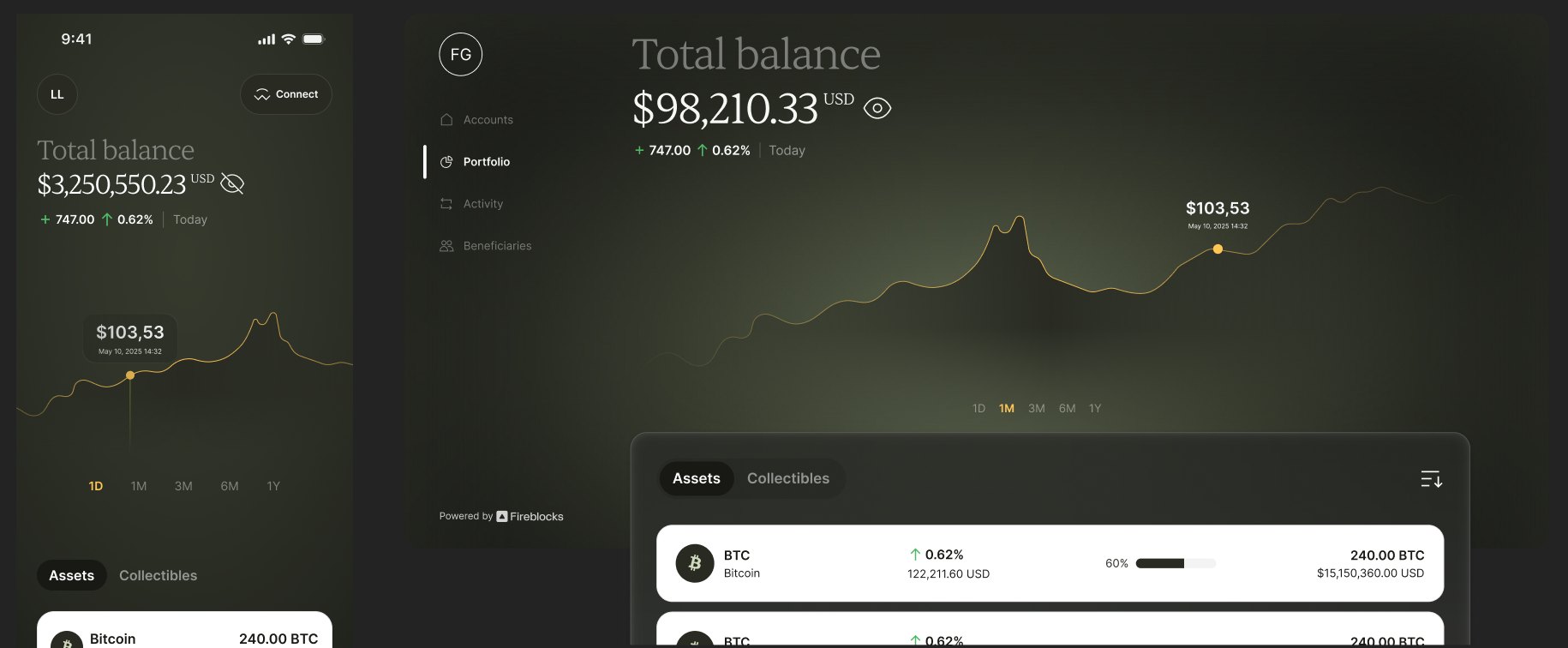
Portfolio on mobile and desktop with balance, chart and asset list
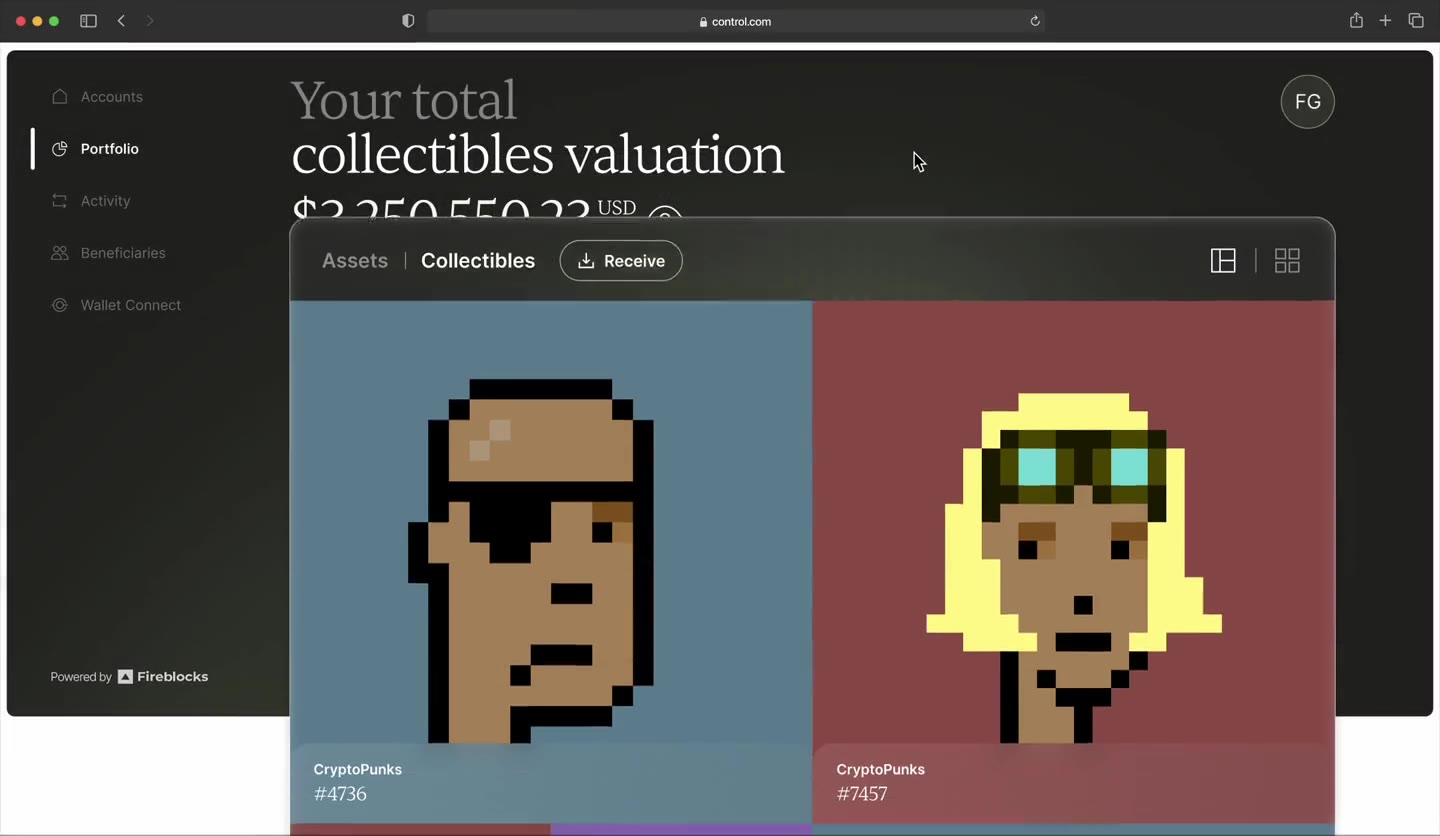
Collectibles valuation on the web console
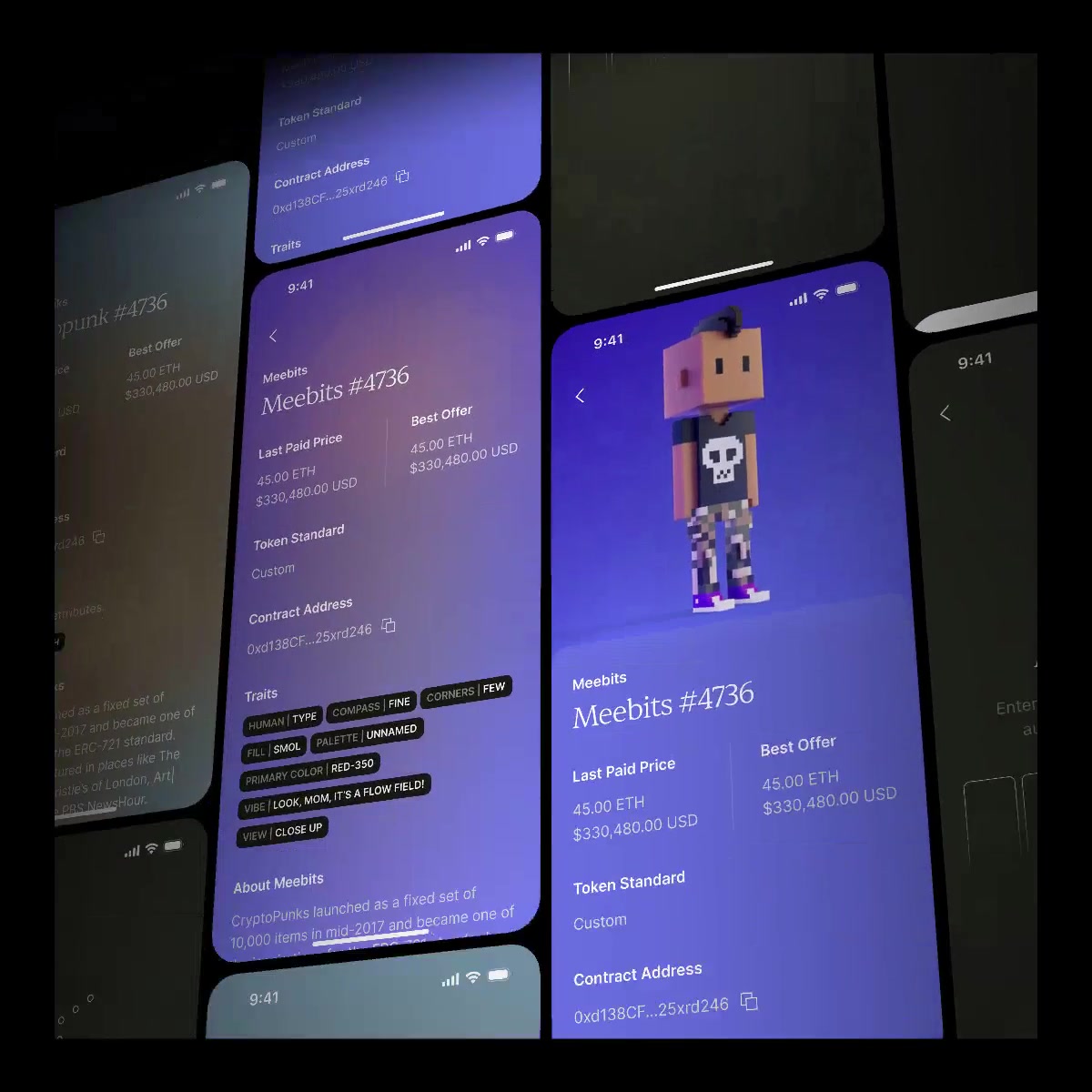
The iOS screen system tilted in space

Account model

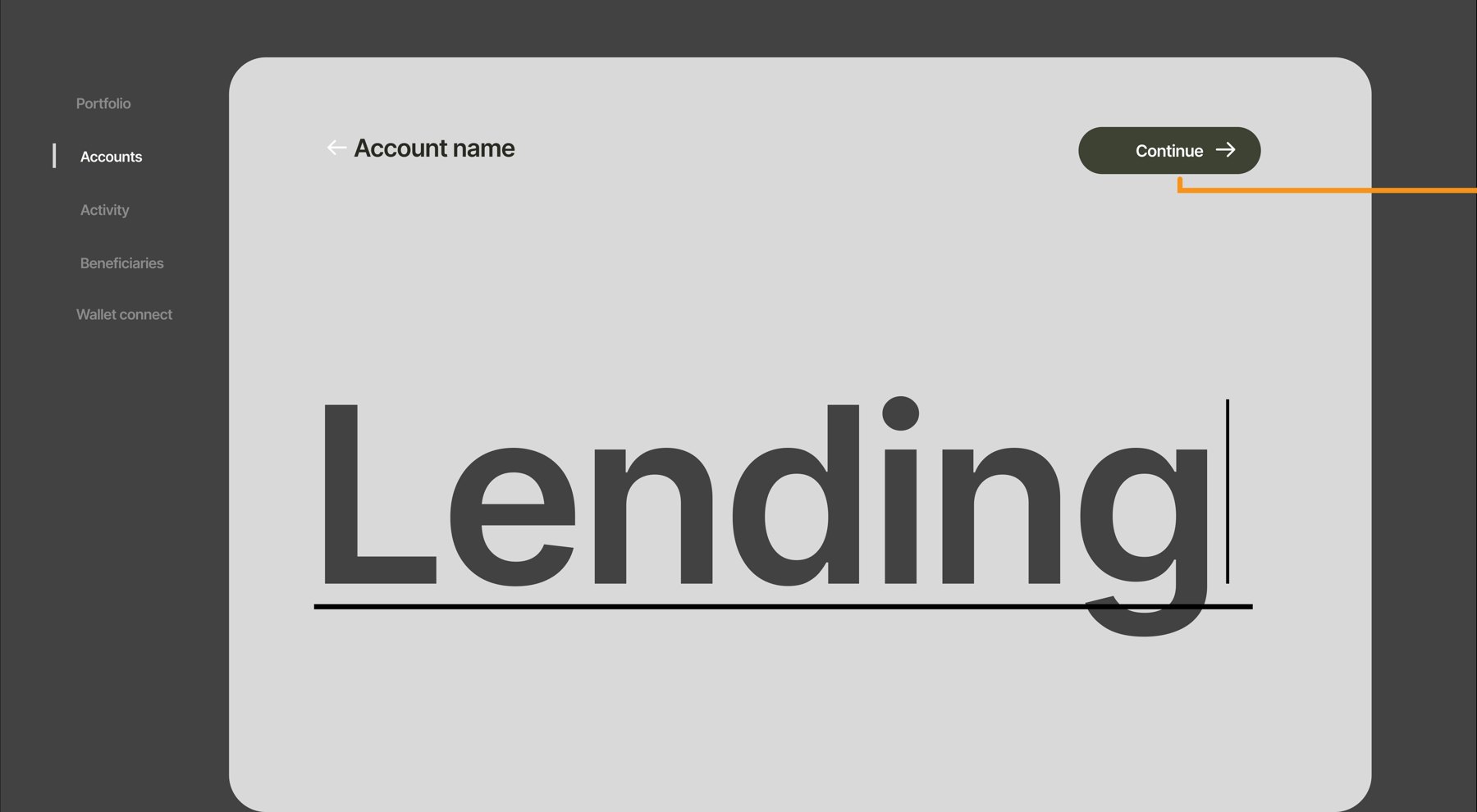
Name the account first, then choose what it holds.

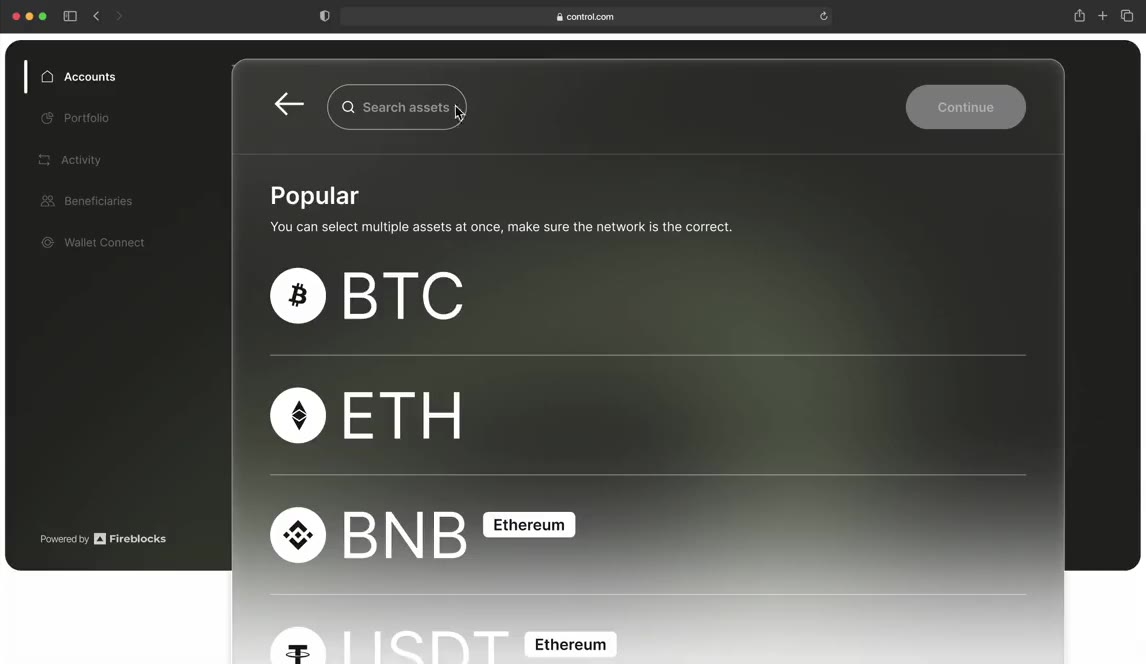
Naming comes first, asset selection second. The same token can live on several networks, so batch selection saves repetition while each asset–network pair stays visible. Search and a review step keep the complexity manageable.

Trade-off. Adding several assets at once is faster, but it raises the risk of sending to the wrong network. Each pick stays visible as an asset–network chip. Production also asks the client to confirm the network before adding it.

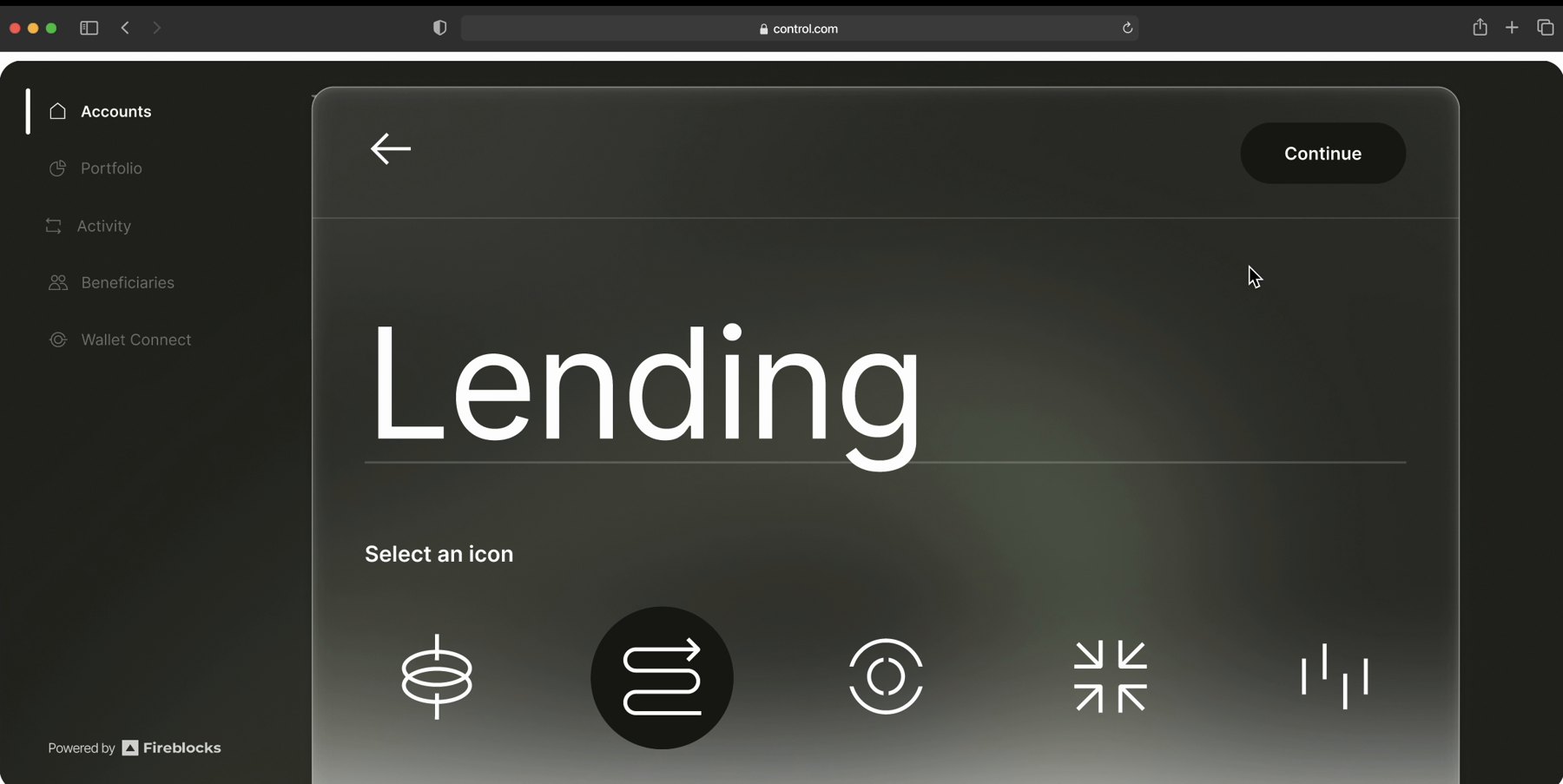
Account naming step
Search results for USDT
Exploration: one account card and a wide add surface

01 Wireframe

Grey wireframe of the account naming step with Lending typed large

02 Prototype

Prototype of the naming step with icon selection

03 Production

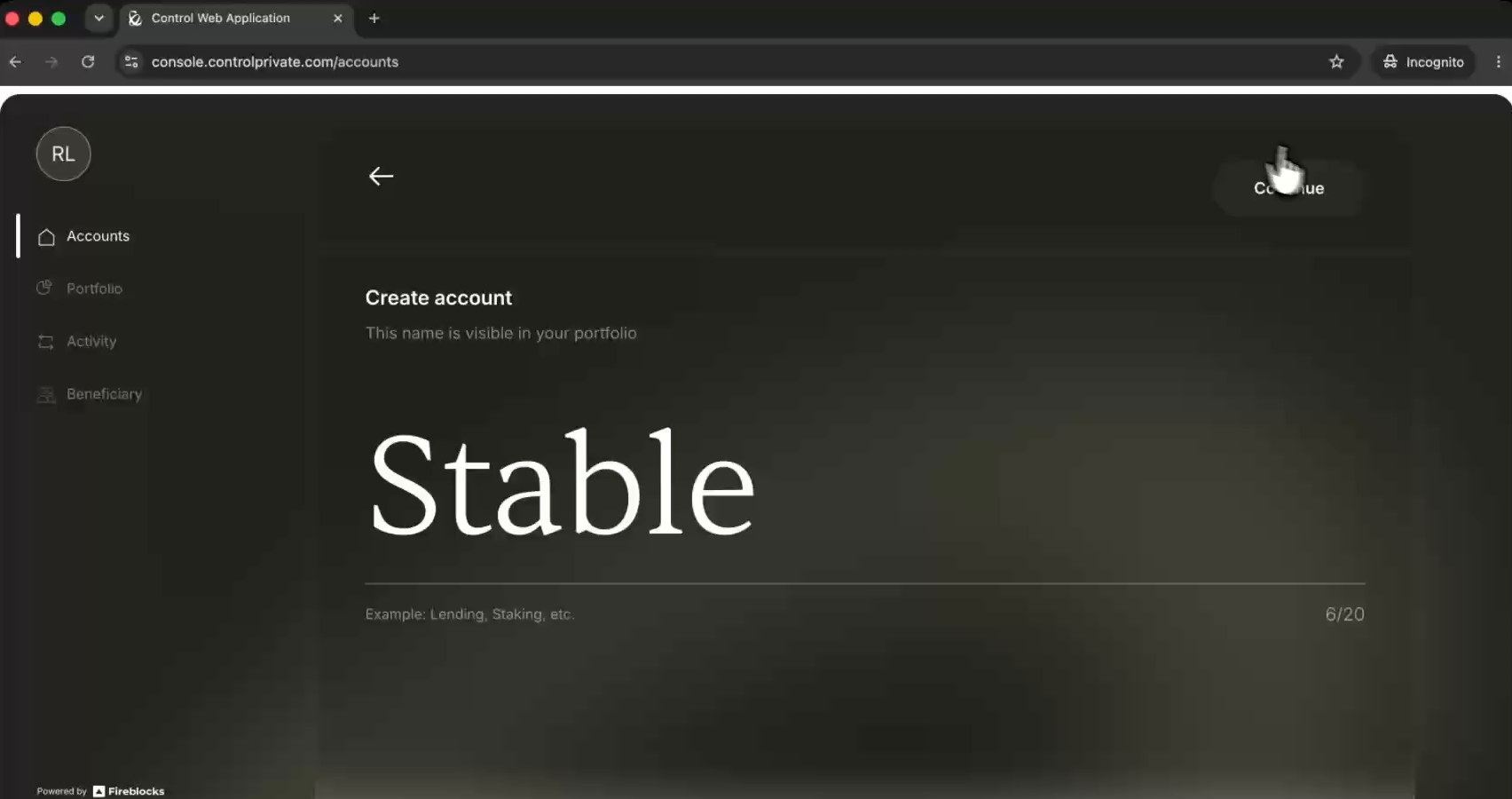
Live web console creating an account named Stable
Annotated wireframe flow for accounts: overview, naming, asset and network selection, search, address creation, deposit notification and account submenu

Security

Signature moments, designed to be understood.

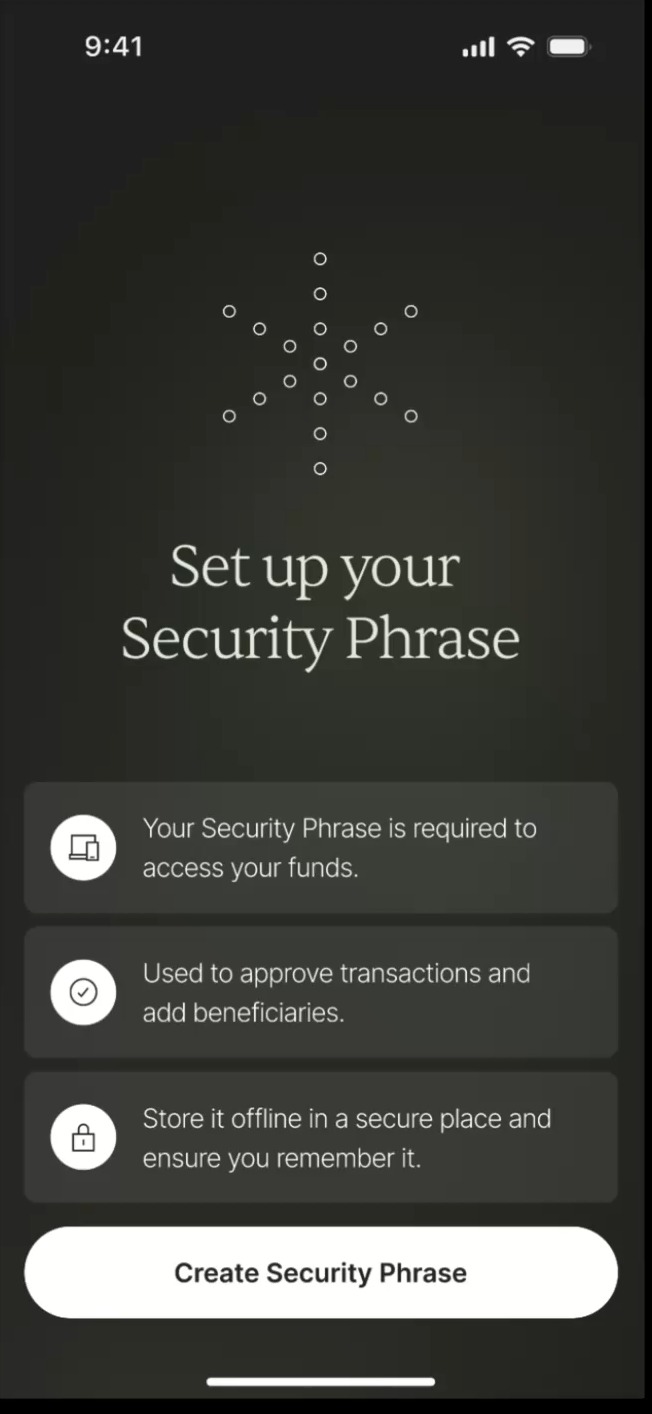
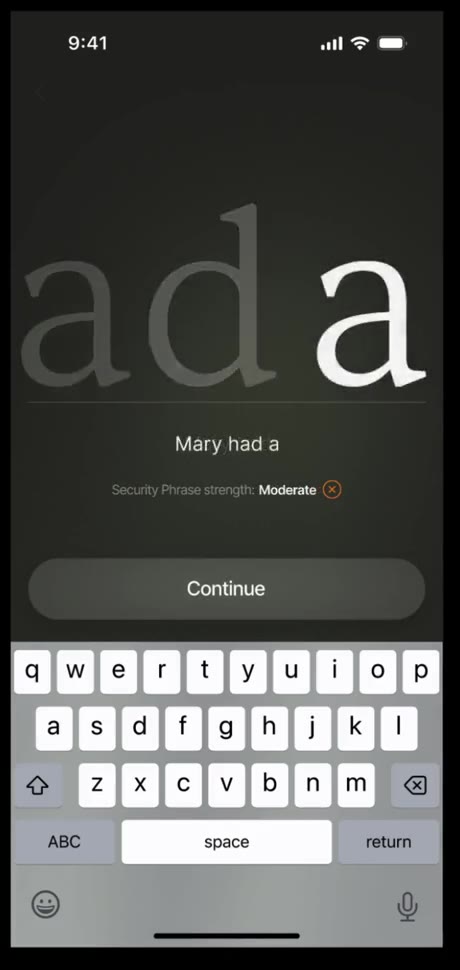
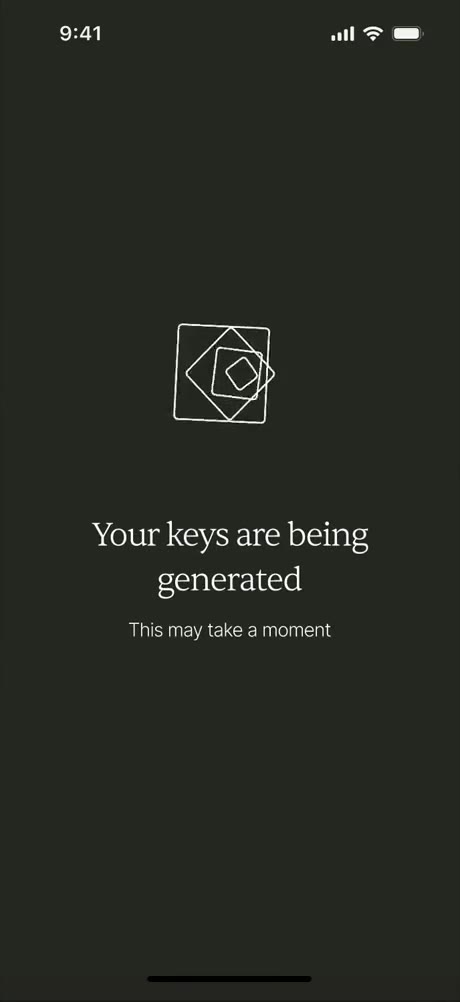
Security steps are where a client most needs to pay attention. We treated them as signature moments, each with oversized type and its own animation. Graphics and motion explain the step along with the words.

Setting the Security Phrase and generating the keys are two of them.

Set up your Security Phrase: required to access funds, approves transactions and beneficiaries, store offline
Security Phrase input, strength Moderate
Your keys are being generated
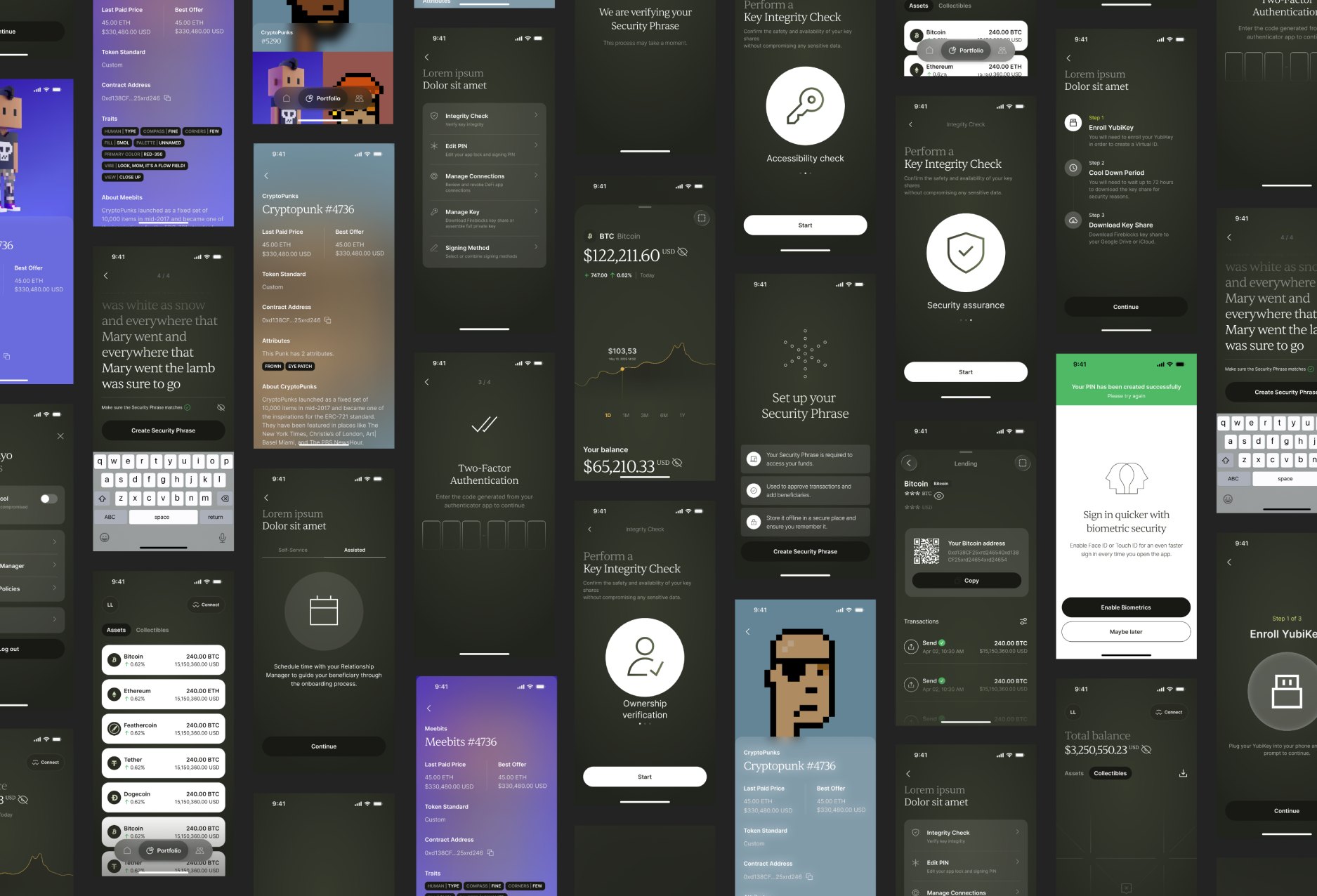
The iOS screen system side by side: Key Integrity Check, YubiKey enrollment, two-factor, biometrics, portfolio, collectibles and send

Why Private Custody

Complete ownership with institutional infrastructure.

Individuals and families who value direct ownership are often anxious about hardware wallets. Some hesitate to adopt them; others already use them and carry the operational burden. A custodian removes that burden, but takes the ownership with it.

I defined Private Custody as a third model: the private banking approach to digital self-custody. Beyond the split key, the client can always download the full key on their own, with a Relationship Manager as part of the product.

Model

Third-party
custody

Delegates authority to institutions.

Ownership
No, a claim on the asset
Institutional infrastructure
Full

Model

Self-
custody

Concentrates full responsibility with individuals.

Ownership
Yes
Institutional infrastructure
None

The new category

Private
Custody

Combines individual authority with institutional infrastructure.

Ownership
Yes
Institutional infrastructure
Full

Brand

One product. One visual language.

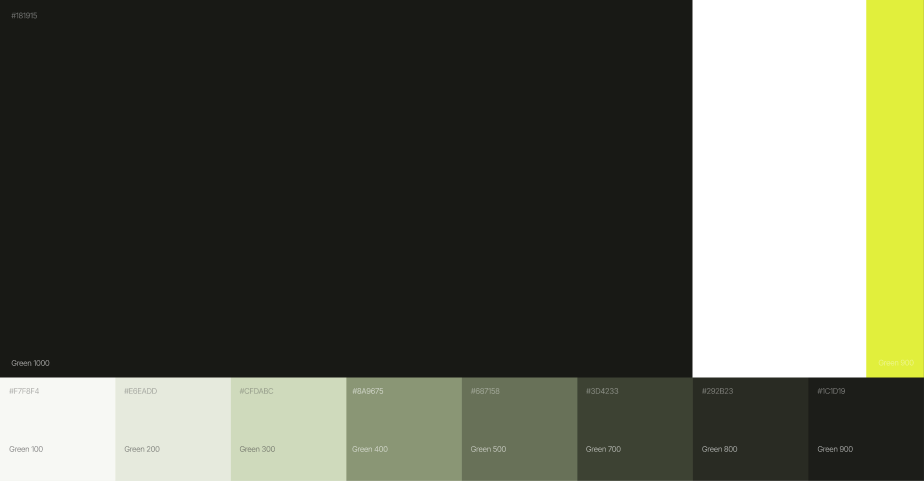
The same system runs across the product, the website and social channels. Its base is a restrained green palette with editorial typography. Detail unfolds progressively, from accounts to assets to collectibles.

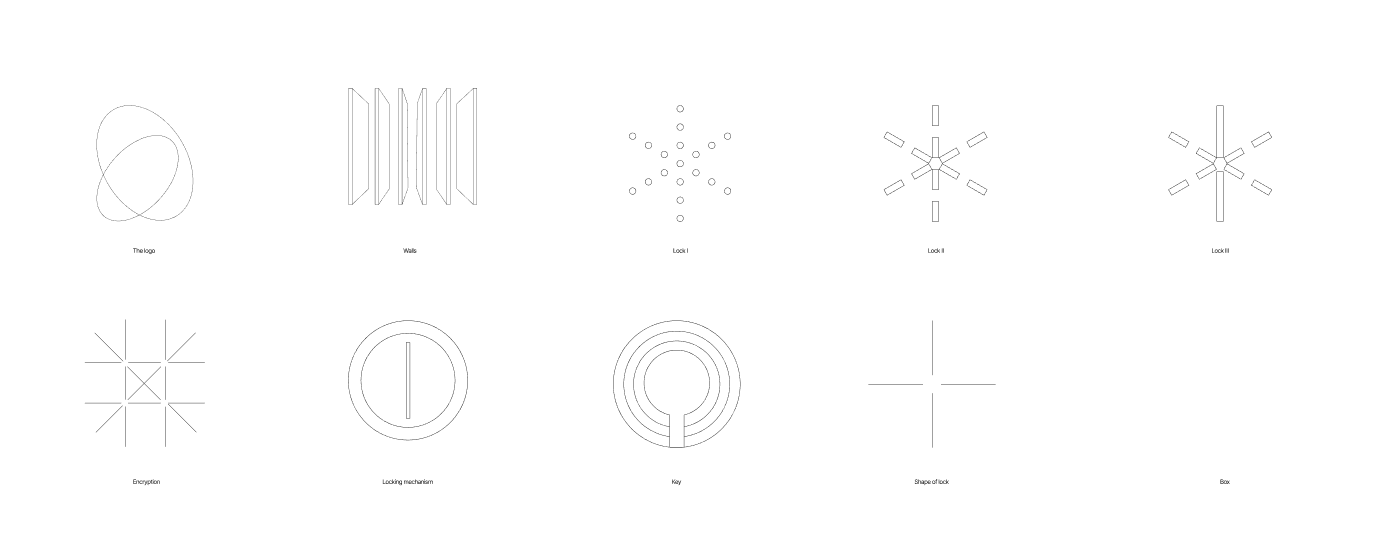
Control graphic elements: the logo, walls, three locks, encryption, locking mechanism, key, shape of lock and box
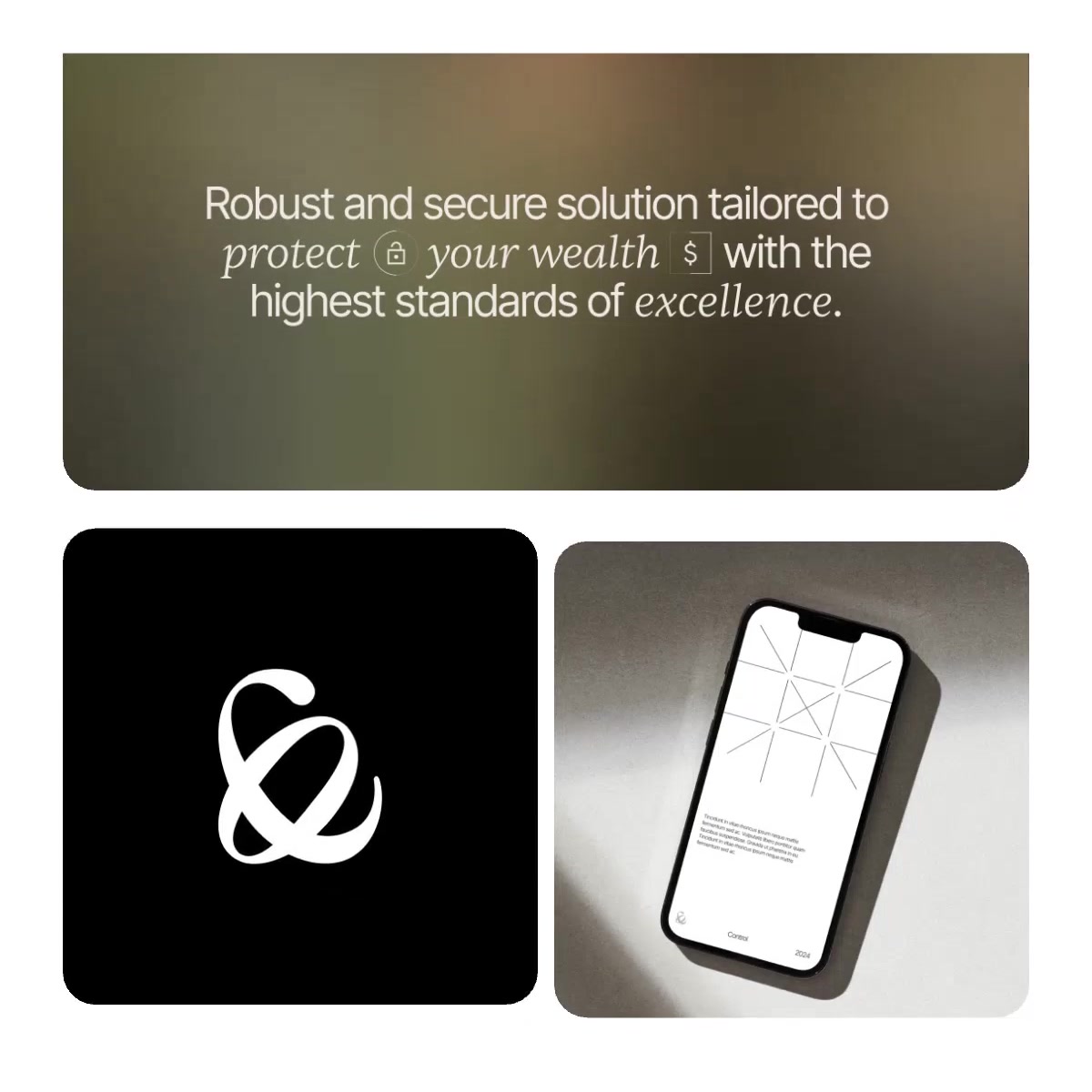
Brand bento: claim, logomark on black, phone on stone
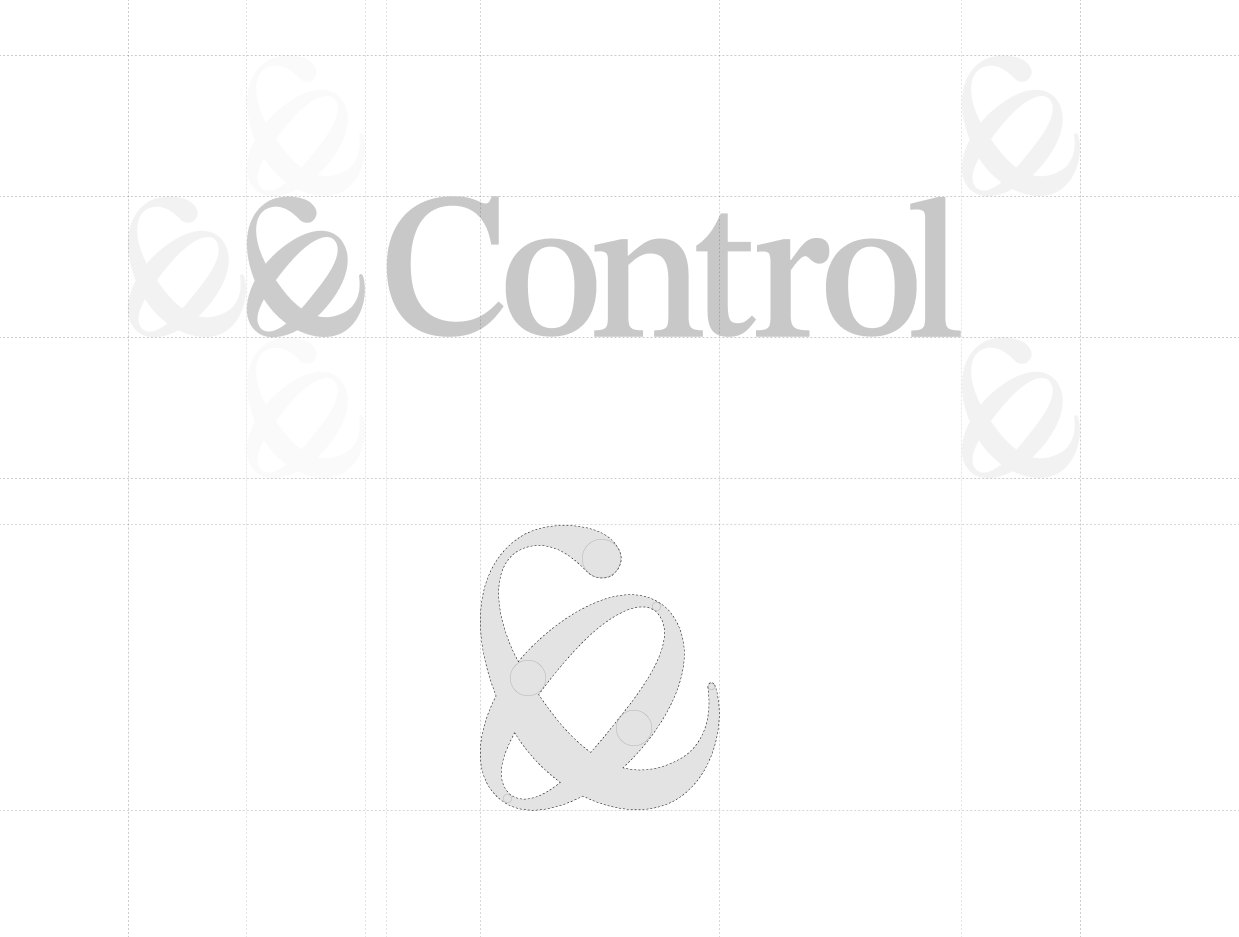
Logo construction grid
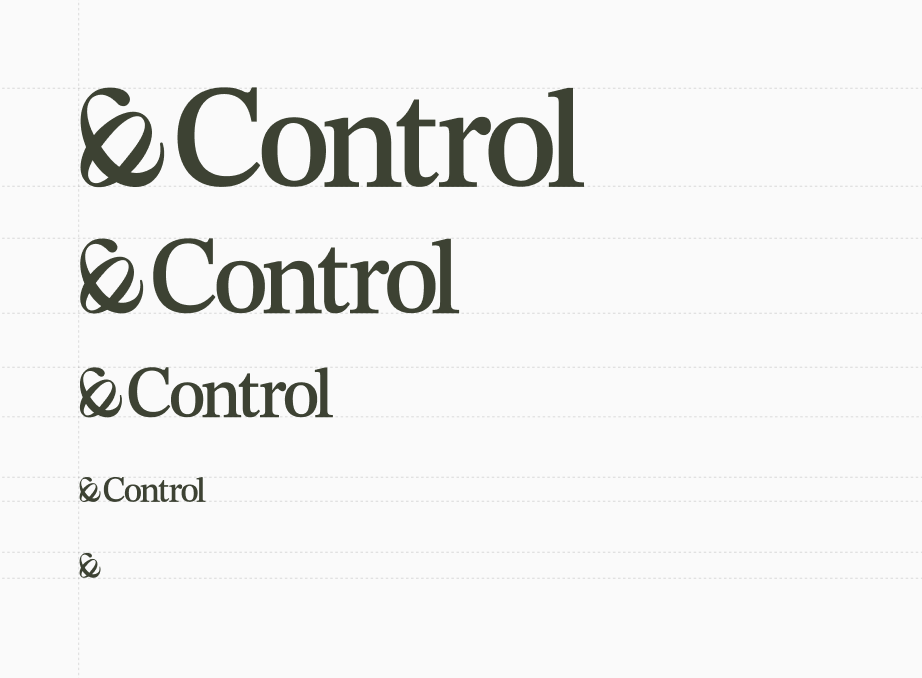
Control wordmark at five sizes on a construction grid
Control palette: Green 1000, white and accent lime above the green scale from 100 to 900
Six account icons drawn as single-line marks
Six social posts in the Control visual language

System rules

Edge cases written down as rules.

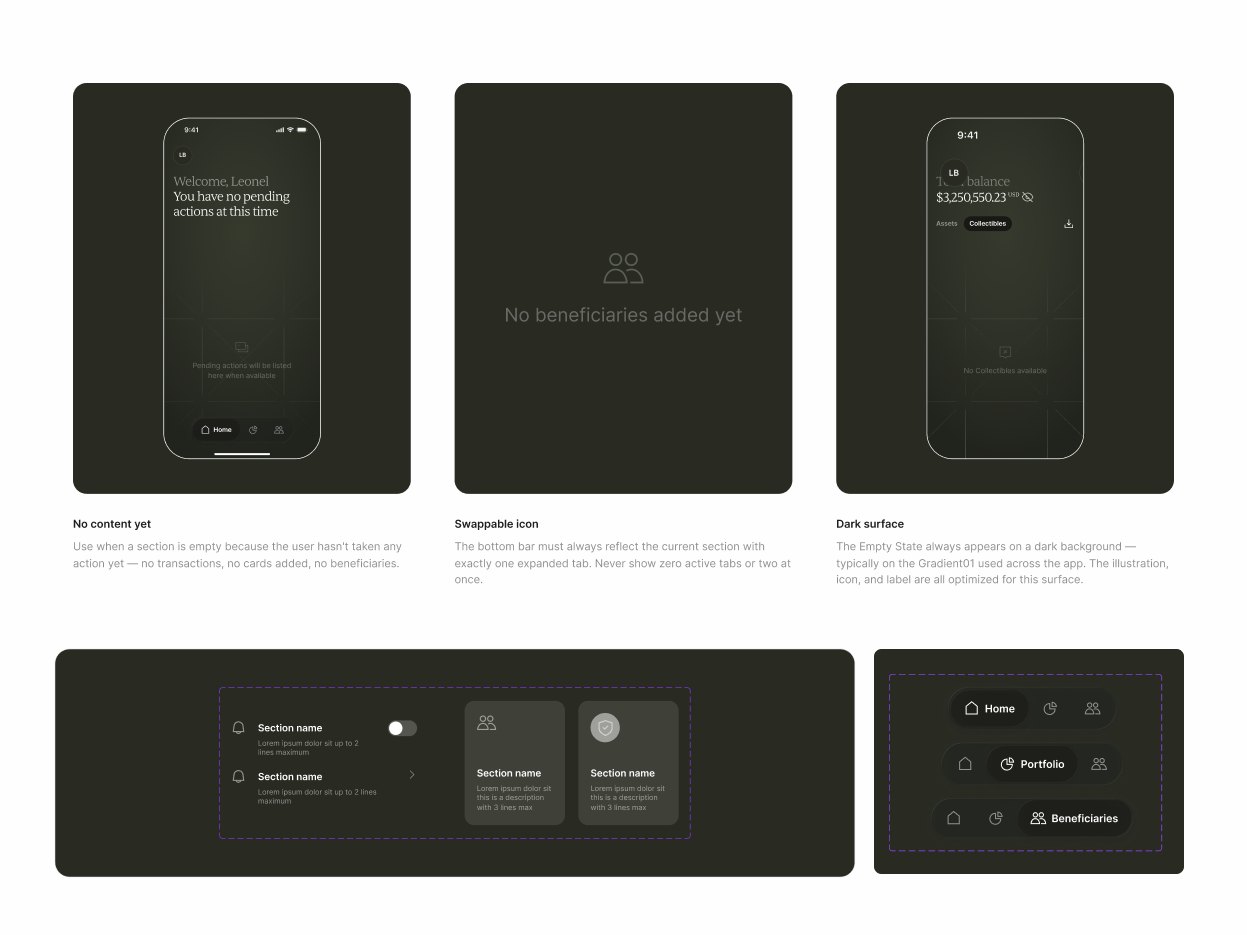
  • Empty statesNo pending actions, no beneficiaries, no collectibles: each says what will appear and when.
  • NavigationThe bottom bar always reflects the current section, with exactly one expanded tab.
  • Long inputA long Security Phrase wraps across lines instead of truncating, with a live “matches” check.
  • LimitsAccount names are capped and counted (6/20), with examples in place.
Documentation of empty-state patterns and bottom bar states

Onboarding

From zero to a new client in 30 seconds.

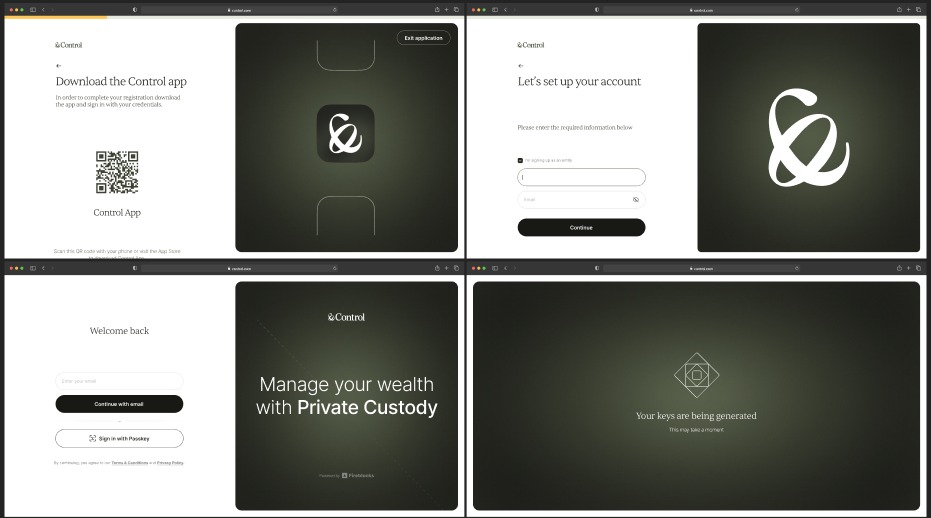
Onboarding has to sync two surfaces, the web console and the iOS app, before keys are generated. That handoff made it one of the most complex flows in the product. It took many iterations to bring it down to 30 seconds.

Four onboarding screens: download the app, set up your account, welcome back, keys being generated
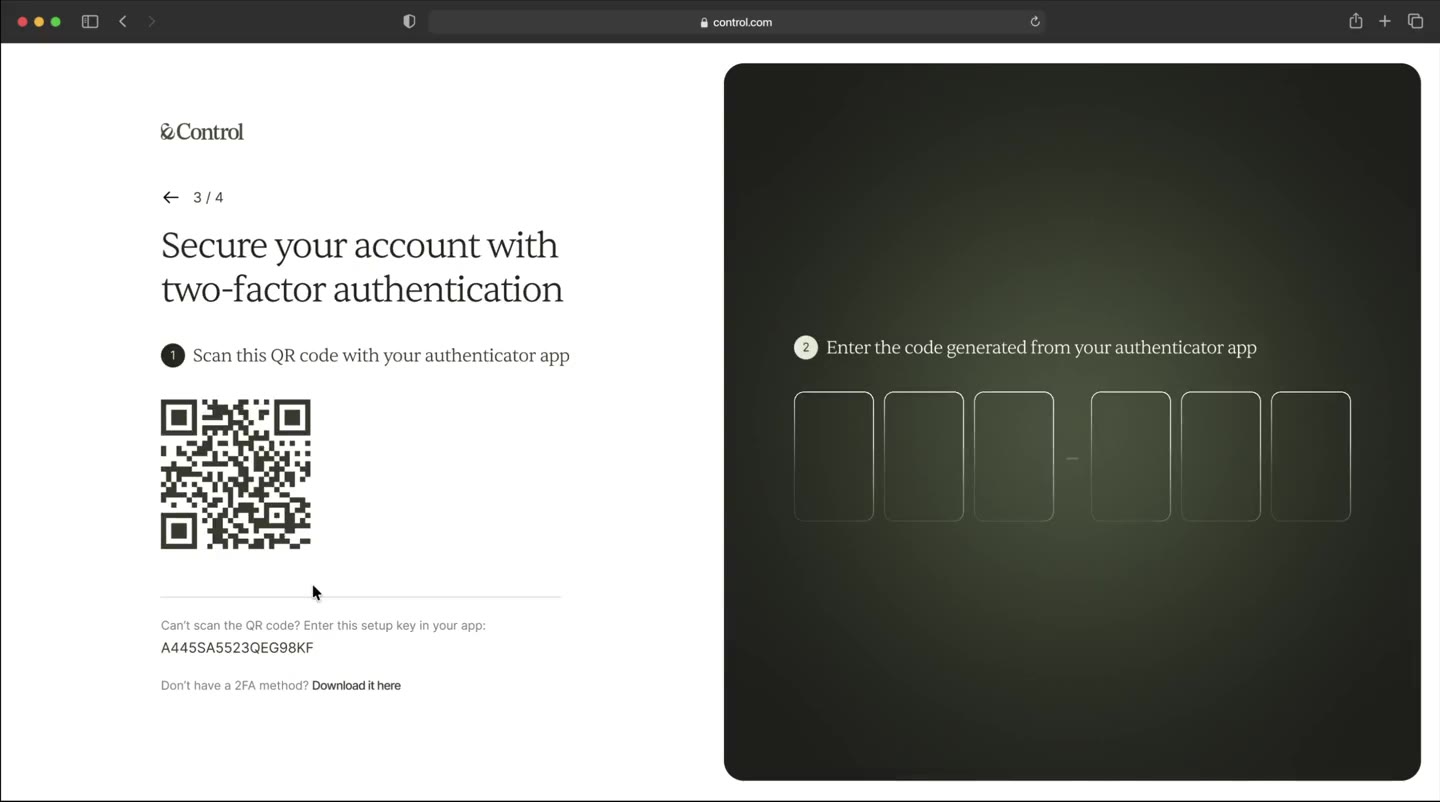
Onboarding prototype: two-factor authentication step

Duress Protocol

Built for the moment it goes wrong.

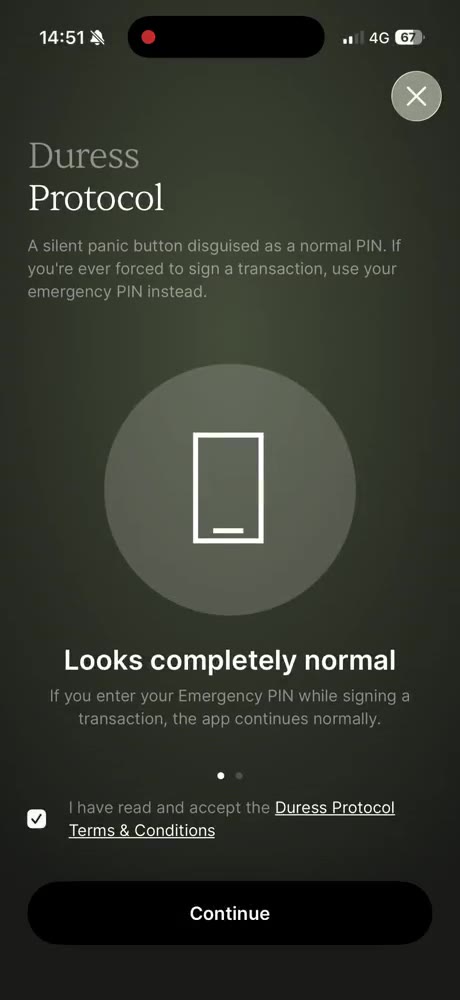
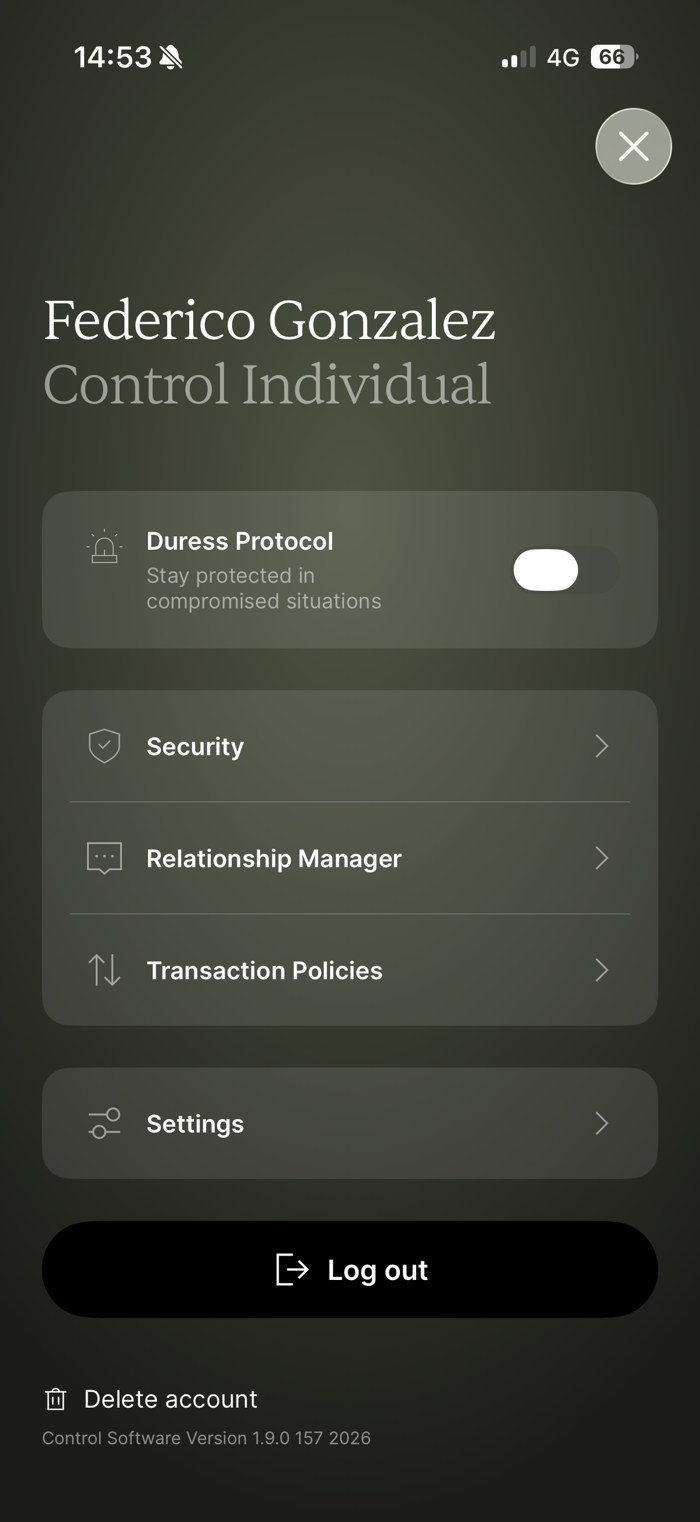
Duress Protocol is a silent panic button disguised as a normal PIN. If a client is forced to sign, the emergency PIN keeps the app looking normal while it alerts a trusted contact and shares the device's current location.

Duress Protocol screen in production
Duress Protocol: looks completely normal, with terms checkbox and Continue

Shipped

Live, with real funds.

Clients use Control on iOS and web today. Live features include multiple accounts per client, beneficiaries, Duress Protocol, selectable signing methods and Key Integrity Check. Control Individual is publicly available; Control Shared has a waitlist.

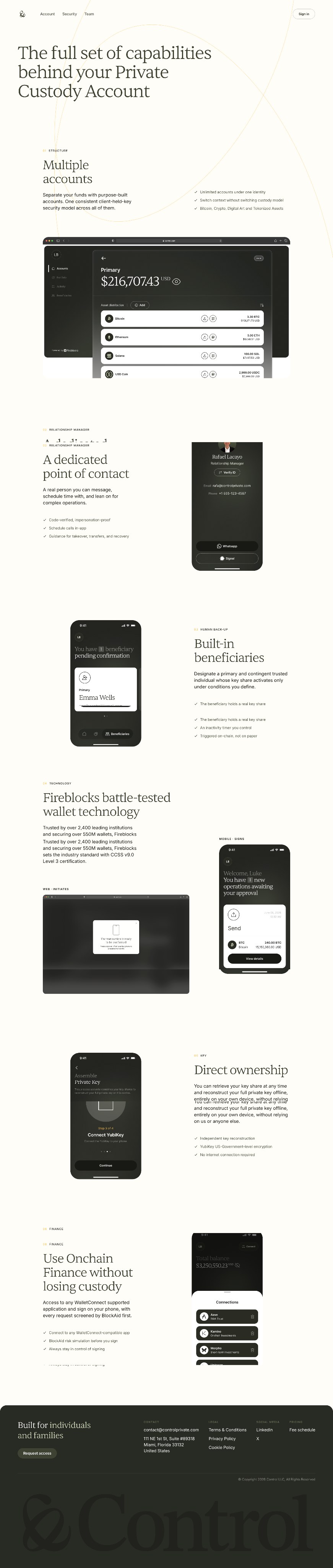
controlprivate.com home page, full length
controlprivate.com account page, full length

How we work

One lifecycle, shared by Product and Engineering.

From an agency to an internal team of two engineers and one designer. Work moves through five stages, with ownership shifting from Product to Engineering along the way. Every major feature starts with a PRD written jointly by Product and Engineering. It covers scope, user journey, roadmap, KPIs.

Development runs in two-week sprints. Brand foundations, the Design System and product docs are structured for AI-assisted implementation. Every change goes through staging and an Engineering review before merge.

Product development lifecycle

  • Product share
  • Engineering share

Stage 1

Discovery

User needs, market context and strategic opportunities.

Product 100Eng 0

OutcomeProblem statement

Stage 2

Definition

What to build and why, with every team aligned on priorities.

Product 80Eng 20

OutcomePRD

Stage 3

Design & handoff

Engineering tasks, release plan and a backlog ready for planning.

Product 80Eng 20

OutcomeBacklog

Stage 4

Development

Two-week sprints. Execution and QA follow the Engineering SDLC workflow.

Product 20Eng 80

OutcomeShipped product

Stage 5

Continuous improvement

Live data and feedback feed the next cycle; operational health stays monitored.

Product 50Eng 50

OutcomeInsights for the roadmap

01Ready for dev
02In progress
03Ready for review
04Visual & functional QA
05Approved
06Done, live in production

Outcomes

Traction without a launch campaign.

In less than a year, Control reached the figures below. So far, growth has come from word of mouth.

These are company results, delivered by the whole team.

30

Client accounts opened

15

Funded client accounts

$40M

Assets in Control

<1yr

Since launch